
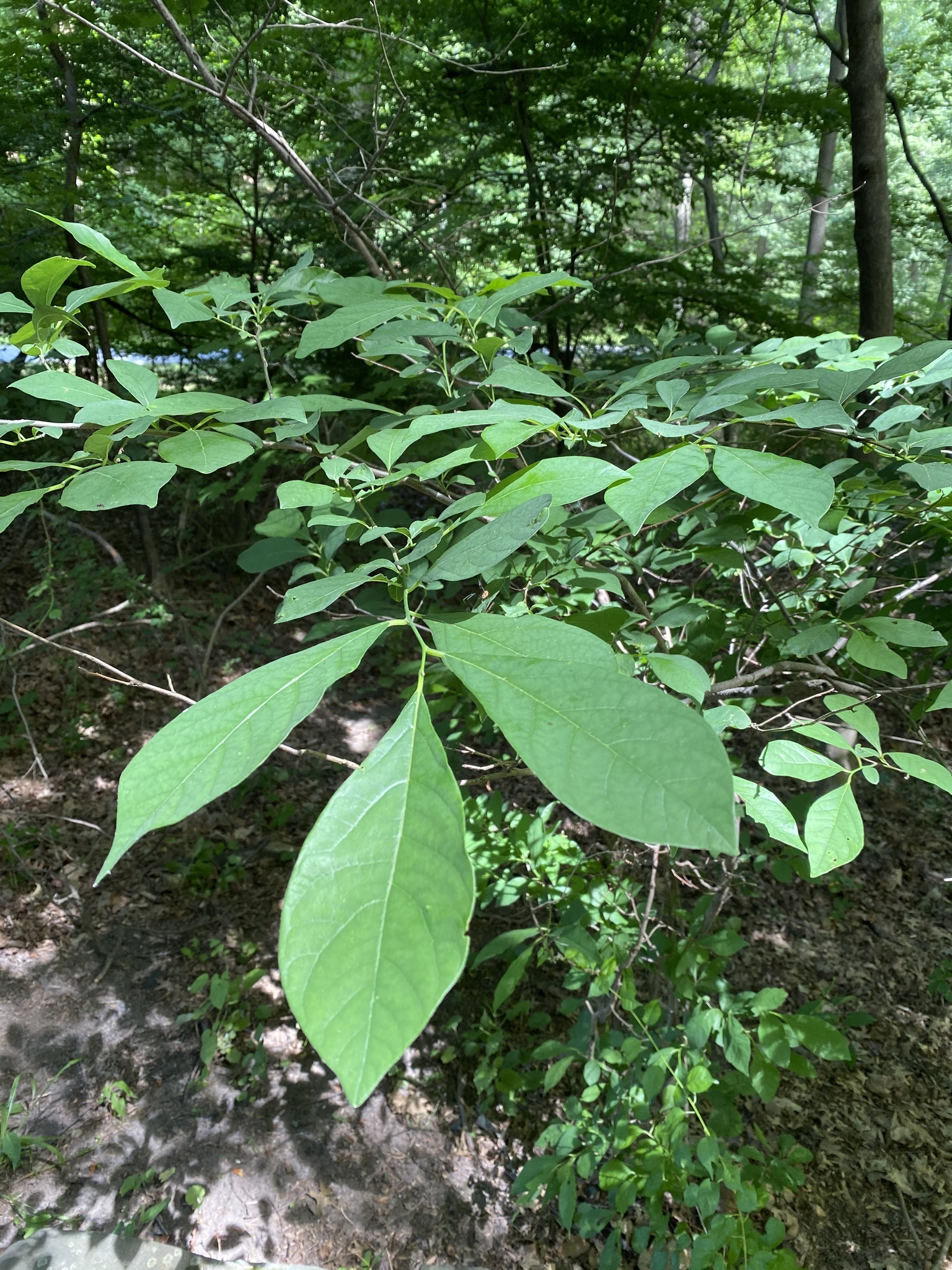
Northern spicebush
Lindera benzoin
A native deciduous shrub of eastern North American bottomland forests, valued for early-spring greenish-yellow blooms, brilliant scarlet drupes on female plants, butter-yellow fall foliage, and its role as the canonical specialist host for spicebush swallowtail butterfly larvae. One of the most ecologically load-bearing native shrubs for partly shaded woodland and rain-garden plantings.
Native: 32 US states + 1 CA province
Climate fit: broad (80/100)
Structure
Pollinator
Light
Part sun / Part shade
Water
Moderate water
Mature size
6-12 ft tall · 8 ft apart
Hardy in zones
5a-9b
very cold to frosty winters
Life cycle
Perennial
Bloom period
Spring
AHS heat range
1-11
Plant range authored in AHS heat-zone terms.
Native in Illinois
Yes
Related products
Sponsored
Shop gardening supplies for Northern spicebush on Amazon ->
Plotwright may earn a commission from purchases made through this link, at no extra cost to you.
A documented larval host for the Spicebush swallowtail and 1 other species - specialist wildlife that depend on plants like this to reproduce.
Cold hardiness
These values are location-based: this location's current hardiness is the baseline, and the 2050 value is a projected future climate for this same location.
Now
Zone 6b
Plotwright
USDA Zone 6b
-5°F to 0°F
Well-suited
Zone 7a
Plotwright
0°F to 5°F
Well-suited
In plain terms: This location has cold winters. Its winters are projected to keep warming through 2050.
✓
Well-suited today and still thriving in 2050.
Heat tolerance
Heat tolerance values are location-based too: heat days today are observed at this site, and the 2050 value projects this same location under a future climate.
Loading AHS heat-zone data for this location...
Where this plant fits
Suitable across 40 ecoregions - 31 climate-resilient through 2070 · 1 suited today · 8 newly possible by 2070. Best matches first.
Similar plants
Browse lateral options with similar roles, light needs, size, or native-range overlap; these are not filtered for a better climate fit.


Appears in collections


Educator packet
Plant packet
Northern spicebush educator packet
A native deciduous shrub of eastern North American bottomland forests, valued for early-spring greenish-yellow blooms, brilliant scarlet drupes on female plants, butter-yellow fall foliage, and its role as the canonical specialist host for spicebush swallowtail butterfly larvae. One of the most ecologically load-bearing native shrubs for partly shaded woodland and rain-garden plantings.
Scientific name
Lindera benzoin
Plant type
shrub
Hardiness
5a-9b
Light
part-sun, part-shade
Moisture
moderate
Spacing
8 ft
Classroom prompts
- Which plant traits are observations, and which are care recommendations?
- How would this plant fit change if the garden location moved warmer, colder, wetter, or drier?
- Which source-backed facts would you cite in a lesson handout?
Use the Sources & citations section below for page citation styles and the field-level source list.
Sources & citations
Cite this page
For lesson plans, articles, or research that uses this page. Use the source cards below to explore the references that informed this record.
Plotwright. (2026, May 17). Northern spicebush (Lindera benzoin). Retrieved 2026, October 9, from https://plotwright.com/plants/lindera-benzoin
Sources used for this record
This record is compiled from the sources below.
Lady Bird Johnson Wildflower Center Native Plant Database
Botanical research database